
Mastering the Art of Flower Care: How to Make Fresh Cut Flowers Last Longer
Receiving or buying a stunning bouquet of fresh flowers brings immense joy and beauty into any home. Whether it’s a thoughtful gift for a special occasion like Valentine’s Day, an anniversary, or simply a treat to brighten your living space, flowers instantly elevate the mood and aesthetics. However, the transient nature of these beautiful blooms can often lead to disappointment as they quickly wilt and fade, sometimes making us question their value. But what if there was a way to significantly extend their vibrant life, allowing you to enjoy their charm for much longer? The good news is, with a few simple yet effective tricks and a little tender loving care, you can transform your approach to flower maintenance. This comprehensive guide will equip you with the knowledge and practical tips to ensure your fresh cut flowers remain radiant and captivating for as long as possible.
We all understand the sentiment behind a fresh bouquet. It’s an investment in beauty and emotion. Therefore, maximizing its lifespan is not just about saving money, but also about appreciating the gesture and preserving the fleeting splendor. Many people struggle with keeping their flowers fresh, often seeing them droop within a few days. But by understanding the basic needs of cut flowers and implementing specific care routines, you can dramatically improve their longevity. We’ll delve into the science behind wilting and provide actionable steps, including time-tested methods and homemade solutions, to keep your floral arrangements looking their best for up to a week or even longer.
RELATED: How To Preserve Flowers Using Borax & Cornmeal
Why Do Fresh Cut Flowers Wilt So Quickly?
Before diving into preservation techniques, it’s helpful to understand the primary reasons why fresh cut flowers tend to wilt. Once a flower is cut from its plant, it loses its direct water and nutrient supply, making it highly vulnerable to its environment. Several factors contribute to its rapid decline:
- Dehydration: This is the most common culprit. Flowers continuously lose water through their leaves and petals (transpiration). If they don’t absorb enough water through their stems to compensate, they dehydrate and wilt. Air bubbles can also form in the stem, blocking water uptake.
- Bacterial Growth: The moment stems are cut, bacteria from the water and air can enter the vascular system of the flower. These microorganisms multiply rapidly, especially in stagnant water, creating blockages in the stems that prevent water absorption. This is why dirty vases and old water are detrimental.
- Lack of Nutrients: Unlike living plants, cut flowers don’t have roots to extract nutrients from the soil. They rely on the sugars stored within their petals and stems, which deplete quickly. Without a fresh supply of food, they lose energy and begin to fade.
- Ethylene Gas: This invisible, odorless gas is a natural plant hormone that accelerates ripening and senescence (aging). Ripening fruits, decaying leaves, and even other wilting flowers release ethylene, which can significantly shorten the life of your fresh blooms.
- Environmental Conditions:
- Heat: High temperatures increase transpiration rates, causing flowers to lose water faster.
- Direct Sunlight: Intense sunlight can ‘cook’ the petals and also accelerate water loss.
- Wind/Drafts: Constant airflow can dry out flowers rapidly.
- Improper Cutting: Crushed or torn stems from dull scissors create blockages and inhibit water uptake.
Understanding these challenges is the first step toward combating them effectively. By addressing each of these factors, we can create an optimal environment for our flowers to thrive and extend their beautiful presence in our homes.
Essential General Care Tips for All Fresh Flowers
Beyond specific treatments, a foundational routine of care is crucial for all fresh cut flowers:
- Prepare Immediately: As soon as you bring flowers home, don’t let them sit out of water. Fill a clean vase with water and have your tools ready.
- Clean Vase is Key: Always use a thoroughly cleaned vase. Residue from previous arrangements or even tap water can harbor bacteria that will instantly contaminate fresh water and clog flower stems. Wash vases with hot soapy water and rinse well.
- Re-cut Stems Under Water (or immediately after): Using a sharp knife or floral shears (not household scissors which can crush stems), re-cut about 1-2 inches off the bottom of each stem at a sharp 45-degree angle. Cutting under water prevents air bubbles from entering the vascular system, which can create a block (embolism) and stop water absorption. If you can’t cut under water, do it quickly and immerse them immediately. The angled cut provides a larger surface area for water absorption and prevents the stems from sitting flat on the bottom of the vase and sealing off water intake.
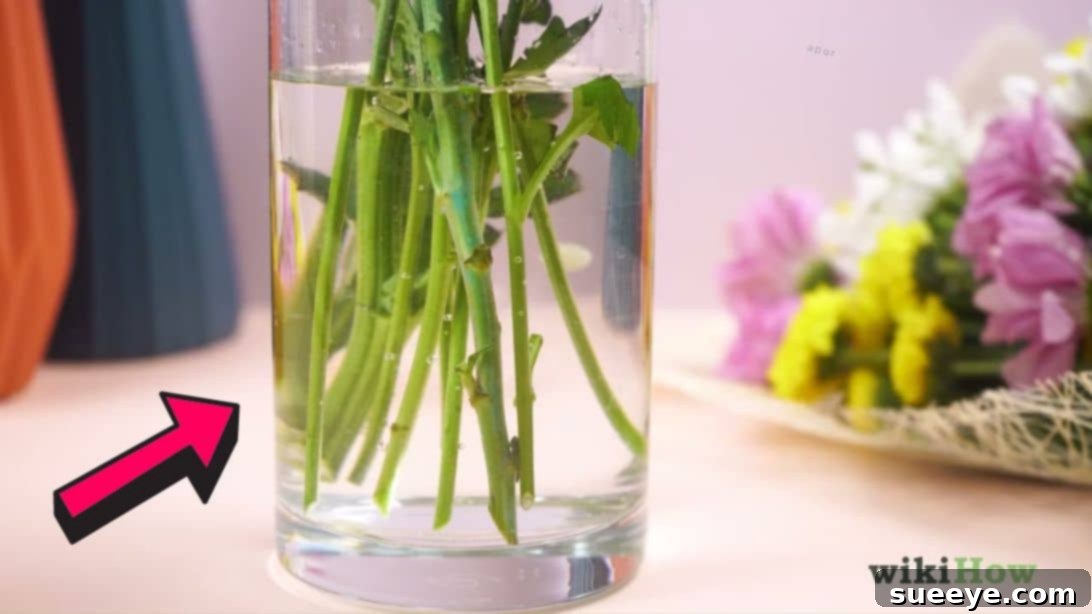
- Remove Submerged Foliage: Any leaves that fall below the waterline in the vase will rot, becoming a breeding ground for bacteria. Carefully strip off all leaves that would be submerged, as well as any damaged petals.
- Change Water Frequently: Replace the water in your vase every 1-2 days. Even with flower food, the water will eventually become murky and harbor bacteria. When changing the water, it’s a good idea to quickly rinse the vase and the bottom of the stems.
- Keep Away from Heat and Direct Sunlight: Place your flowers in a cool spot, away from direct sunlight, heating vents, radiators, and even certain electronic appliances that generate heat. Cooler temperatures slow down the aging process.
- Avoid Ripening Fruits: Keep your floral arrangements away from fruit bowls, especially those containing ripening fruits like apples, bananas, and tomatoes. These fruits release ethylene gas, which significantly accelerates the wilting and decay of flowers.
- Trim Spent Blooms: As individual flowers within an arrangement begin to wilt or die, remove them. This not only keeps the arrangement looking tidy but also prevents the release of ethylene gas from the dying blooms, which could affect the healthier ones.
Specific Tricks to Make Your Flowers Last Longer
Beyond the general care, here are three proven methods that can give your fresh flowers an extra boost in longevity:
1. The Warm Water Advantage: Enhancing Water Absorption
Using warm water might seem counterintuitive, as we often associate freshness with cold. However, for fresh cut flowers, warm water offers distinct benefits that significantly improve water absorption and the delivery of vital nutrients.
Materials You’ll Need:
- A clean vase
- Sharp floral shears or a sharp knife (secateurs)
- Lukewarm water (around 100-110°F or 38-43°C)
- Commercial flower preservative (highly recommended for best results)
Step-by-Step Guide:
- Prepare Your Vase: Ensure your vase is spotless. Half-fill it with lukewarm water. The warmer temperature is key because water molecules move faster in warm water, making it less viscous than cold water. This allows the water to travel up the stems more easily and efficiently, hydrating the flowers much quicker.
- Prepare the Stems: Using your sharp shears, re-cut about 1-2 inches off the bottom of each flower stem at a 45-degree angle. This angled cut maximizes the surface area for water absorption and prevents the stem from resting flat on the bottom of the vase, which could seal off the water uptake. Remove any leaves that would fall below the waterline to prevent bacterial growth and stem rot.
- Add Flower Preservative: Mix in the recommended amount of commercial flower preservative according to the package instructions. Flower food typically contains three essential components:
- Sugar: Provides carbohydrates (food) for the flowers’ energy.
- Acidifier: Lowers the pH of the water, making it easier for flowers to absorb. Tap water often has a high pH, which can hinder uptake.
- Biocide/Bleach: Inhibits the growth of bacteria and fungi in the water, keeping the stems clear and free from blockages.
- Arrange Your Flowers: Carefully insert the prepared flower stems into the vase with the warm water and flower food solution. Avoid overcrowding the vase, as this can restrict airflow and damage petals. Ensure that all stems reach the water.
- Ongoing Maintenance: Change the water and replenish the flower food every 1-2 days. Each time you change the water, it’s beneficial to re-trim the stems by a small amount (about a quarter-inch) to open up fresh pathways for water absorption.
This warm water technique, combined with a quality flower preservative, is one of the most effective ways to hydrate your flowers and provide them with the necessary nutrients for a prolonged display.
2. The Aspirin Boost: A Simple Home Remedy for Flower Longevity
Aspirin, a common household medication, can work wonders for your wilting flowers. The key ingredient, acetylsalicylic acid, acts as an acidifier, similar to components found in commercial flower foods. It helps lower the pH of the water, making it easier for the flower stems to absorb water efficiently. Additionally, aspirin may possess mild antibacterial properties that can help keep the water cleaner.
Materials You’ll Need:
- A clean vase
- Water (room temperature is fine, but lukewarm is better if possible)
- One uncoated aspirin tablet (standard 325mg or 500mg)
Step-by-Step Guide:
- Prepare Your Flowers: Start by preparing your flowers as you would with any method: re-cut the stems at an angle and remove any leaves below the waterline.
- Fill the Vase: Place the flowers in a clean vase and fill it with fresh water.
- Add Aspirin: Drop one uncoated aspirin tablet into the vase. For larger arrangements or very large vases, you might use two tablets. You can either let it dissolve on its own or crush it into a powder first to speed up dissolution.
- Regular Refreshment: The aspirin will help acidify the water for a day or so. To maintain its effectiveness, you should change the water and add another aspirin tablet every 1 to 2 days. This ensures that the water remains at an optimal pH for absorption and helps inhibit bacterial growth.
- Observation: While aspirin is a helpful remedy, remember it primarily addresses the pH and has some antibacterial action. It does not provide the vital sugar (food) that commercial flower preservatives do. Therefore, it may not be as comprehensive, but it’s a readily available and effective solution for improving water uptake.
This simple trick can give your flowers a noticeable boost, particularly if you don’t have access to commercial flower food.
3. Crafting Your Own Elixir: A DIY Homemade Plant Food
If you prefer a homemade solution or find yourself without a commercial flower preservative, you can easily create an effective plant food using common household ingredients. This DIY concoction mimics the essential components of commercial flower food, providing nutrients and inhibiting bacterial growth.
Materials You’ll Need:
- 1 quart (about 1 liter) of fresh, lukewarm water
- 2 tablespoons of fresh lemon juice (acts as an acidifier)
- 1 tablespoon of sugar (provides vital carbohydrates/food)
- 1/2 teaspoon of household bleach (serves as a biocide to kill bacteria)
- A bowl or measuring jug for mixing
- A clean vase
- Sharp floral shears or a knife
Step-by-Step Guide:
- Mix the Solution: In a bowl or measuring jug, combine 1 quart of lukewarm water, 2 tablespoons of lemon juice, 1 tablespoon of sugar, and 1/2 teaspoon of bleach. Stir the mixture thoroughly until the sugar is completely dissolved.
- Lemon Juice: Lowers the pH of the water, making it acidic. This helps the water move up the stems more easily.
- Sugar: Provides the necessary food source (carbohydrates) for the flowers, giving them energy to stay vibrant.
- Bleach: Acts as an antibacterial agent, preventing the growth of microorganisms in the water that can clog the flower stems and cause rot. Don’t worry, the small amount used is safe for flowers and effective against bacteria.
- Prepare Your Flowers: Before placing them in the homemade solution, meticulously trim the flower stems by cutting 1-2 inches off at a sharp angle. This opens up fresh vascular pathways for water absorption. Also, ensure you remove any leaves that would be submerged in the water to prevent decay and bacterial buildup.
- Transfer to Vase: Pour your freshly mixed homemade plant food into a clean vase. Then, carefully arrange your prepared flowers in the vase, ensuring all stem ends are fully submerged in the nutrient solution.
- Regular Maintenance: To maximize the benefits of this homemade solution, it’s crucial to change the plant food every 1-2 days. Each time you replenish the solution, take the opportunity to quickly re-trim the bottom of the stems by about a quarter-inch. This consistent care routine will help prevent blockages and provide a continuous supply of fresh nutrients.
This DIY plant food is a fantastic, cost-effective way to provide comprehensive care for your fresh cut flowers, combining essential nutrients with antibacterial protection.
Beyond the Basics: Advanced Tips for Super-Long-Lasting Blooms
For those truly dedicated to flower longevity, consider these additional advanced care techniques:
- Re-hydrating Droopy Flowers: If your flowers arrive or become slightly droopy, give them a “bath.” Re-cut the stems under water, then submerge the entire flower (stem, leaves, and head) in a sink or tub filled with cool water for 30 minutes to an hour. Many flowers can absorb water through their petals and leaves, giving them a quick refresh.
- Misting: Some flowers, particularly those with delicate petals or tropical varieties, benefit from a light misting of clean, cool water a few times a day. This helps reduce transpiration and keeps their petals hydrated, but be careful not to overdo it, as excessive moisture can encourage fungal growth.
- Consider Flower-Specific Needs: Different flowers have unique requirements. For example:
- Roses: Removing thorns isn’t strictly necessary for longevity but can make handling easier. Some recommend crushing the woody ends of rose stems for better water uptake, but a clean angle cut is usually sufficient.
- Tulips: Keep growing even after being cut! They can be pruned if they get too tall and can even be re-cut and given fresh water to perk up.
- Hydrangeas: Known for wilting quickly. If they droop, try submerging their entire head in water for 30 minutes. Also, a very sharp, clean cut and quick transfer to water are crucial.
- Sacrificial Leaves: For woody-stemmed flowers or branches, sometimes removing a few extra leaves higher up the stem can reduce the overall water demand, allowing the bloom to get more.
- Ethylene Blockers: Some commercial flower foods include ingredients that block the effects of ethylene gas. If you frequently have issues with flowers near fruit, seek out these specialized foods.
Conclusion: Enjoying the Enduring Beauty of Fresh Flowers
The fleeting beauty of fresh cut flowers doesn’t have to be quite so fleeting. By integrating these simple yet powerful tips into your flower care routine, you can significantly extend their life and enjoy their vibrant presence for much longer. From the foundational steps of immediate stem cutting and water changing to the specific benefits of warm water, aspirin, or a homemade food solution, each technique contributes to combating the natural processes of wilting and decay.
Remember, a little consistent effort goes a long way. Investing a few minutes every day or two to refresh the water, re-cut stems, and provide nutrients will transform your experience with fresh flowers. No longer will you dread their rapid decline; instead, you’ll savor their enduring charm and beauty, making every bouquet a truly worthwhile and special addition to your home. So go ahead, confidently embrace the art of flower care, and let your beautiful blooms brighten your days for longer!