
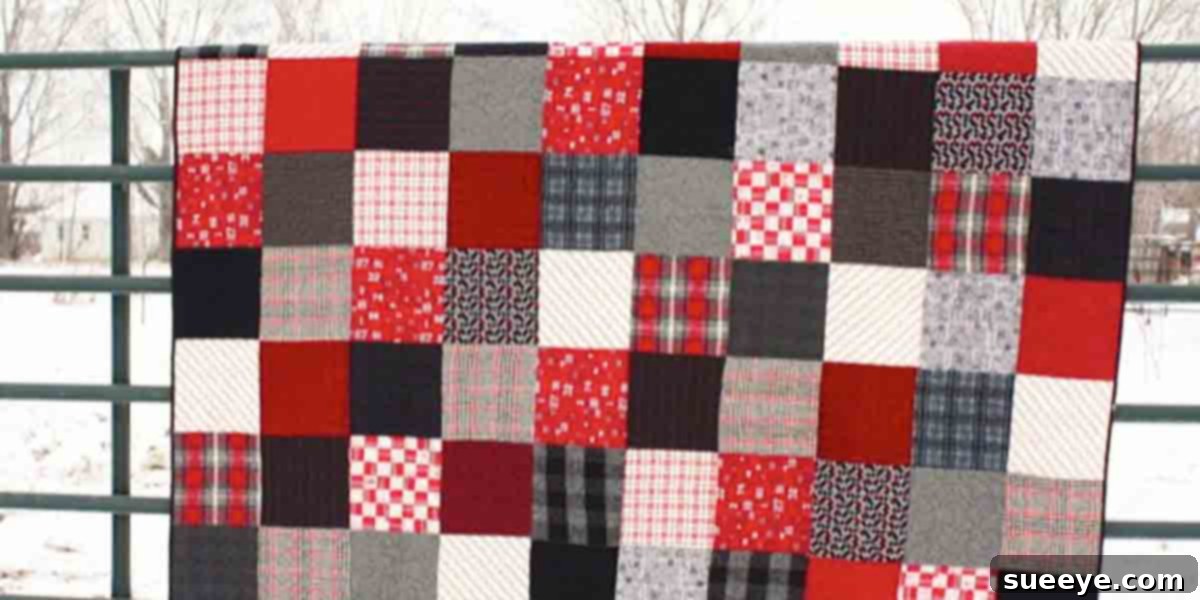
Craft Your Own Cozy Flannel Quilt: The Perfect Project for Warmth and Comfort
As the chill of winter approaches, there’s nothing quite as inviting as the thought of snuggling up under a warm, soft blanket. A flannel quilt is the ultimate answer to this craving for comfort, offering unparalleled softness, incredible warmth, and remarkable durability. I knew I couldn’t wait to create one of these for the colder months, and I dove right into the project!
Flannel, with its distinctive brushed surface, feels wonderfully gentle against the skin. Beyond its luxurious feel, it boasts impressive resilience, standing up to repeated washing cycles without losing its charm. In fact, many flannel enthusiasts find that their quilts become even softer and more inviting with each wash, making them a lasting treasure for any home.
Why Choose Flannel for Your Next Quilting Project?
Flannel isn’t just a fabric; it’s an experience. Its unique characteristics make it an ideal choice for quilting, especially for those seeking warmth and a tactile, comforting feel. Here’s why flannel stands out:
- Unmatched Softness: The brushed surface of flannel creates a luxuriously soft texture that feels incredibly gentle and comforting, perfect for snuggling.
- Exceptional Warmth: The fuzzy fibers trap air efficiently, providing excellent insulation and making flannel quilts exceptionally warm without being overly heavy.
- Durability That Lasts: Despite its soft feel, flannel is a robust fabric. It’s designed to withstand frequent use and washing, ensuring your quilt remains a beloved item for years.
- Gets Softer with Every Wash: One of the most beloved qualities of flannel is its tendency to become even softer and more pliable after each wash. This means your quilt will only get more comfortable over time.
- Vibrant and Diverse Patterns: Flannel comes in an astonishing array of patterns and colors, from classic plaids to whimsical prints and solid hues. This variety allows for endless creative possibilities, enabling you to design a quilt that perfectly matches your personal style or home decor. While some might opt for darker, more traditional tones, I personally gravitate towards a more colorful flannel quilt, believing that bright and cheerful patterns can truly bring a space to life.
The Incredible Versatility of a Plaid Flannel Quilt
A handmade flannel quilt is far more than just a bed covering. Its robustness and ease of care make it incredibly versatile, serving a multitude of purposes around your home and beyond. This plaid flannel quilt, for instance, promises utility in countless scenarios:
- A Warm Bed Quilt: This is often the primary motivation for many quilters, and for good reason. A flannel quilt on your bed provides an extra layer of warmth and a touch of handcrafted charm that transforms your bedroom into a cozy sanctuary. Its comforting weight is ideal for a restful night’s sleep.
- Perfect for Outdoor Adventures: Planning a camping trip? A flannel quilt is your go-to for chilly evenings around the campfire. Its durability means it can handle the rigors of outdoor use, and it’s easy to clean when you get back home.
- Picnic Essential: Forget flimsy blankets! A sturdy flannel quilt makes an excellent picnic blanket, providing a soft and warm surface to relax on, even on cooler days. It’s thick enough to offer a barrier against damp ground and soft enough for comfortable lounging.
- Game Day Companion: Heading to a sporting event? Whether it’s a high school football game or a professional baseball match, a flannel quilt offers unparalleled warmth and comfort in the stands. It’s easy to pack and throw over your lap when the temperature drops.
- Cozy Couch Throw: Elevate your living room’s comfort factor by draping a beautiful flannel quilt over your sofa or armchair. It’s perfect for impromptu naps, movie nights, or simply adding a touch of rustic elegance to your decor.
- Thoughtful Handmade Gift: A flannel quilt makes an incredibly personal and cherished gift for birthdays, holidays, or housewarmings. The time and effort put into creating it will be deeply appreciated by the recipient.
- Pet-Friendly Comfort: Even your furry friends will adore a flannel quilt! Its softness and warmth make it an ideal addition to a pet bed or a cozy spot on the floor, offering a comforting retreat for your beloved animals.
The beauty of a flannel quilt lies in its adaptability. It’s so easy to simply toss it into the wash, and it consistently emerges even softer and more inviting with each laundering. This makes it a practical and beloved item for countless activities and countless years.
Starting Your Flannel Quilt Journey: An Easy and Rewarding Project
If you’ve been searching for an accessible and rewarding quilting project, a plaid flannel quilt is an outstanding choice. Its straightforward construction, often involving simple squares, makes it perfect for beginners while still allowing experienced quilters to explore creative variations. Many quilters find the process therapeutic and incredibly satisfying.
Perhaps a handmade quilt is already on your “to-do” list for the year? If not, after seeing how easy and delightful this project can be, I’ll bet it will be now! The sense of accomplishment and the joy of creating something beautiful and functional with your own hands are truly unparalleled.
Choosing Your Fabric: The Heart of Your Flannel Quilt
The selection of your flannel fabric is where your quilt truly begins to take shape. Flannel is available in a stunning array of colors, patterns, and weights, allowing for immense creative freedom.
- Pattern Play: Classic plaids are a popular choice for flannel quilts, evoking a sense of timeless comfort and rustic charm. However, don’t limit yourself! Consider combining different plaid patterns, mixing them with solids, or incorporating playful prints.
- Color Palette: While Laura Coia’s tutorial might feature darker, more subdued tones, feel free to let your personal preference guide your color choices. I often prefer vibrant and cheerful colors, believing they can bring an uplifting energy to any room. You might opt for a coordinated scheme of pastels, a bold mix of primary colors, or a sophisticated blend of jewel tones.
- Type of Flannel: Most quilting flannel is 100% cotton, which is soft, breathable, and easy to work with. There are also blends, but for maximum comfort and traditional feel, cotton flannel is usually preferred.
- Pre-Washing: It’s highly recommended to pre-wash all your flannel fabrics before cutting. Flannel is known to shrink, and pre-washing ensures that all shrinkage occurs before your quilt is assembled, preventing puckering or distortion in the finished piece.
Simple Design Ideas for Beginners: Square by Square
The beauty of a flannel quilt, especially for those new to quilting, often lies in its simplicity. One of the easiest and most effective ways to construct a beautiful flannel quilt is by using fabric squares.
- Uniform Squares: Following a method similar to what Laura Coia demonstrates, you can simply cut fabric squares all the same size and sew them together in rows, then sew the rows together. This creates a visually harmonious quilt top that’s incredibly straightforward to piece.
- Varying Sizes: To add a bit more visual interest, you can cut squares in different sizes and arrange them in a pleasing pattern. This allows for dynamic layouts without significantly increasing the complexity of the sewing.
- Expand to Any Size: The modular nature of squares means your quilt can be made to any desired size. Simply add more squares to increase its length and width. You can also adjust the size of the individual squares themselves – larger squares will result in a quicker project, while smaller squares offer more detail.
- Beyond Basic Squares: Once comfortable with squares, you can explore slightly more advanced but still beginner-friendly blocks like half-square triangles (HSTs) or simple strip piecing to add more intricate designs to your flannel quilt. However, starting with basic squares is always a fantastic foundation.
Gathering Your Essential Tools & Materials
Before you dive into cutting and sewing, ensure you have all the necessary tools and materials at hand. Having everything organized will make your quilting process smooth and enjoyable.
- Flannel Fabric: Choose several coordinating flannel fabrics for your quilt top. Don’t forget a backing fabric (which can also be flannel for extra warmth!) and binding fabric.
- Quilt Batting: This is the middle layer that provides warmth and loft. Opt for cotton, polyester, or a blend, depending on your desired warmth and drape.
- Rotary Cutter, Mat, and Ruler: Essential for precise and efficient cutting of your fabric squares.
- Sewing Machine: A basic sewing machine capable of a straight stitch is all you need.
- Coordinating Thread: High-quality polyester or cotton thread that matches or complements your flannel fabrics.
- Fabric Scissors: For trimming threads and other small cuts.
- Quilting Pins or Clips: To hold fabric pieces together securely.
- Seam Ripper: For those inevitable “oops” moments.
- Iron and Ironing Board: Crucial for pressing seams flat and ensuring your blocks lie smoothly.
A Basic Step-by-Step Guide to Making Your Flannel Quilt
While an in-depth tutorial like the one by Laura Coia with Sew Very Easy will provide detailed instructions, here’s a simplified overview of the steps involved in crafting your easy flannel quilt:
- Pre-wash and Press Fabrics: As mentioned, wash all your flannel fabrics to preshrink them and remove any excess dye. Once dry, press them thoroughly to remove wrinkles, making them easier to cut accurately.
- Cut Your Squares: Using your rotary cutter, mat, and ruler, precisely cut your flannel fabrics into the desired square sizes. Consistency in cutting is key for a quilt that lies flat.
- Piece the Quilt Top: Arrange your cut squares into a pleasing layout. Sew them together in rows using a consistent seam allowance (typically 1/4 inch). Press the seams of alternating rows in opposite directions to help them nest when sewing rows together. Then, sew the rows together to form the complete quilt top.
- Layering the Quilt Sandwich: On a large, flat surface (the floor works well!), create your quilt “sandwich.” First, lay down your backing fabric, right side down. Tape it securely to prevent shifting. Next, layer your batting smoothly on top of the backing. Finally, place your pieced quilt top on top of the batting, right side up.
- Basting: Secure all three layers together using safety pins (quilting pins), basting spray, or long hand stitches. This prevents shifting during the quilting process.
- Quilting: This is where you stitch through all three layers to hold them together and add texture. For a simple flannel quilt, “stitch in the ditch” (sewing along the seams of your pieced squares) or simple straight lines are perfect. You could also try tie-quilting, where you use yarn or thread to tie knots through all layers at regular intervals.
- Trim and Bind: Once quilted, trim the edges of your quilt to square it up. Then, prepare and attach your binding strip around all four edges. The binding finishes the raw edges and adds a professional touch to your quilt.
Watch how Laura Coia, with Sew Very Easy, expertly makes this great quilt in her step-by-step tutorial. Her clear instructions will guide you through each phase, empowering you to start making one for your home with confidence!
Caring for Your Flannel Quilt: Keeping It Soft and Beautiful
One of the best features of a flannel quilt is how easy it is to care for. To maintain its softness and extend its lifespan:
- Machine Wash Gentle: Wash your quilt in cold or warm water on a gentle cycle with a mild detergent. Avoid harsh chemicals or bleach.
- Tumble Dry Low: Tumble dry on a low heat setting, or air dry to prevent excessive shrinkage or damage to the fibers. Remove promptly to minimize wrinkles.
- No Fabric Softener Needed: Flannel naturally softens with each wash, so fabric softeners are generally unnecessary and can sometimes even build up on the fibers.
The Joy of Quilting: Beyond the Fabric
Creating a flannel quilt is more than just sewing fabric together; it’s an act of creativity, comfort, and love. The process of choosing fabrics, cutting, piecing, and quilting can be incredibly meditative and rewarding. Each stitch contributes to a unique piece of art that will provide warmth and joy for years to come, whether for yourself, your family, or as a cherished gift.
Start Your Flannel Quilt Today!
Don’t let the thought of quilting intimidate you. A flannel quilt made from simple squares is an ideal entry point into this wonderful craft. Its forgiving nature and delightful outcome make it a perfect project for anyone looking to add a touch of handmade warmth and comfort to their life. So gather your beautiful flannel fabrics, fire up your sewing machine, and embark on the satisfying journey of creating your very own cozy flannel quilt. You’ll be glad you did!
Photo Credit: Diary of a Quilter, Amy Smart