
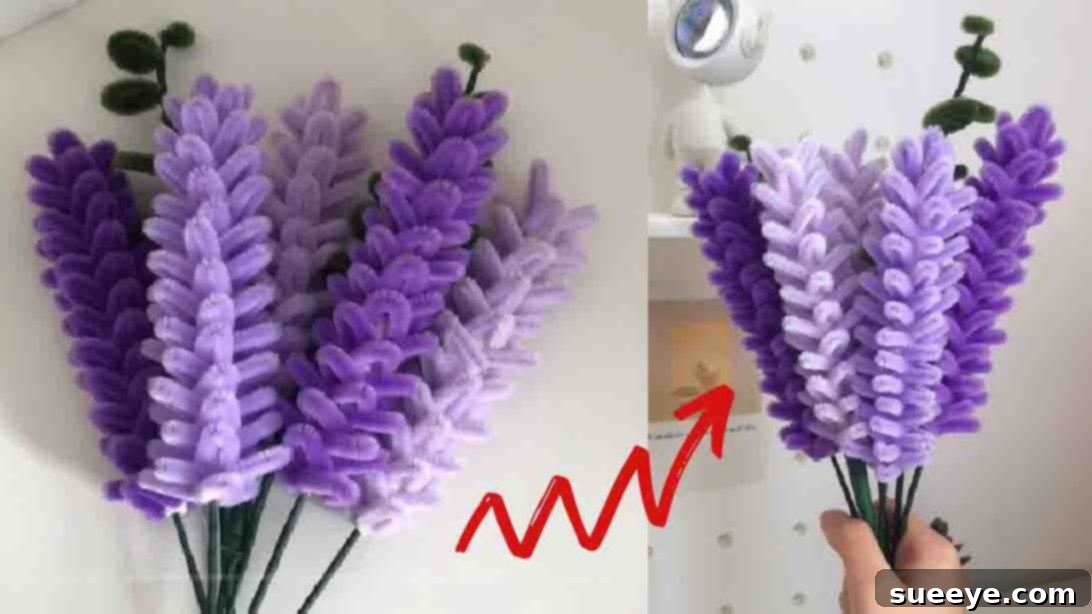
DIY Pipe Cleaner Lavender Flowers: An Easy & Affordable Craft Tutorial
Are you searching for a delightful and inexpensive weekend craft project that yields stunning results? Look no further than these charming DIY pipe cleaner lavender flowers! Inspired by the fantastic tutorial from @cutediyvrolija on TikTok, this project offers a refreshing take on handmade floral decor. Unlike traditional paper flowers, these unique pipe cleaner creations boast a distinctive texture and a surprising resemblance to real lavender blooms. They are not only one of the most satisfying DIYs you’ll undertake, but also incredibly budget-friendly, requiring only a few basic craft supplies you likely already have on hand. Prepare to be amazed by how simple and quick it is to transform humble pipe cleaners into beautiful, lasting floral arrangements. Whether you’re a seasoned crafter or a complete beginner, this step-by-step guide will help you create a charming bouquet of pipe cleaner lavender, perfect for gifting or adorning your home. Get ready to unleash your creativity and craft something truly special today!
Why Choose Pipe Cleaner Lavender Flowers?
In a world full of crafting options, why should pipe cleaner lavender flowers capture your attention? The answer lies in their unique blend of simplicity, durability, and aesthetic appeal. Firstly, the cost-effectiveness is unbeatable. Pipe cleaners are one of the most affordable craft materials, making this project accessible to everyone, regardless of budget. You can create a whole bouquet for a fraction of the cost of real flowers or more elaborate craft supplies.
Beyond the price, these DIY flowers offer a therapeutic and rewarding crafting experience. The repetitive motion of shaping the pipe cleaners can be incredibly calming, making it a wonderful activity for unwinding after a long week. Moreover, unlike fresh flowers that wilt and fade, pipe cleaner lavender lasts indefinitely, providing a permanent touch of beauty to any space. They are also remarkably versatile; use them to brighten up a desk, add a splash of color to a bookshelf, or create unique centerpieces for events. Their soft, fuzzy texture adds an unexpected tactile element, setting them apart from other artificial flowers. This project is also fantastic for children (with adult supervision for the hot glue gun), helping them develop fine motor skills and fostering creativity. Choosing this craft means opting for lasting beauty, mindful creation, and a truly unique decorative element.
Materials You’ll Need
One of the many joys of this DIY pipe cleaner lavender project is the minimal list of materials required. You won’t need any specialized tools or expensive supplies; just a few readily available items will suffice to bring your floral vision to life. Here’s what you’ll gather:
- Purple Pipe Cleaners: These are the star of our show! Opt for various shades of purple (light lavender, deeper violet) to create a more natural and visually interesting bouquet. You’ll need a good number of these, as each flower requires several small pieces.
- Green Pipe Cleaners: Essential for crafting the realistic leaves of your lavender stems. Choose a vibrant green to contrast beautifully with the purple blooms.
- Ruler: For precise measurements of your pipe cleaner segments, ensuring uniformity in your petals. Accuracy here contributes to a neater, more professional-looking finished flower.
- Scissors: A sharp pair of craft scissors will make cutting the pipe cleaners much easier and cleaner.
- Hot Glue Gun and Glue Sticks: Your primary adhesive. A hot glue gun provides a strong, quick-drying bond, crucial for securely attaching the petals to the stem. Always exercise caution when using a hot glue gun.
- Paper Towel: Used to add bulk and texture to your stems, making them more substantial and easier to work with.
- Sticks (for the Stem): Natural twigs or wooden skewers work perfectly. Look for straight, sturdy sticks that will serve as the core of your lavender stems. Ensure they are clean and dry.
- (Optional) Floral Wire: If you prefer more flexible or very thin stems, floral wire can be used in place of or alongside natural sticks.
- (Optional) Floral Tape: Green floral tape can be used to wrap around your finished stem, covering the paper towel and green pipe cleaner to give it a more cohesive and polished look.
- (Optional) Small Vase or Container: For displaying your finished bouquet.
Step-by-Step Directions: Crafting Your Lavender Blooms
Following the brilliant technique shared by @cutediyvrolija, creating these pipe cleaner lavender flowers is surprisingly straightforward. Let’s break down each step to ensure your crafting journey is smooth and enjoyable.
1. Preparing the Lavender Petals
The foundation of your beautiful lavender bloom begins with consistently sized petals. Start by taking one of your purple pipe cleaners. Using a ruler, measure a segment exactly 4 cm long. With your scissors, carefully cut this segment. Once cut, gently bend the 4 cm piece in half, creating a small, U-shaped loop. This will form a single ‘petal.’ Repeat this process diligently, cutting and bending many more purple pipe cleaner pieces. For a typical lavender stem, you will need approximately 20-30 such petals, depending on how dense and full you want your flower to appear. Consistency in size and shape here will result in a more uniform and attractive final product.
2. Crafting the Flower Stem
Next, we will prepare the core of your lavender flower: the stem. Take one of your chosen sticks (a natural twig or wooden skewer). Using your hot glue gun, apply a small amount of hot glue to one end of a paper towel strip. Begin wrapping the paper towel tightly around the stick, starting from one end and working your way down. The purpose of the paper towel is to add bulk and create a better surface for the pipe cleaner petals to adhere to. Continue wrapping until about three-quarters of the stick is covered, leaving approximately 1/4 of the stick uncovered at the very end. Secure the end of the paper towel with another dab of hot glue. This uncovered section will serve as the initial anchoring point for your first layer of petals.
3. Assembling the Lavender Bloom
Now comes the exciting part: bringing your lavender flower to life! Begin by applying a generous dab of hot glue to the very tip of the paper-towel-wrapped stem (the end where the paper towel finishes). Take your first bent purple pipe cleaner petal and attach it to this glued tip in a slightly slanted, upward-facing position. Hold it in place for a few seconds until the glue sets. Continue this process, attaching more petals around the tip of the stem, working your way downwards in a spiral or circular fashion. Ensure each petal slightly overlaps the previous one, creating a dense, conical shape characteristic of lavender. Maintain consistency in the angle and spacing of your petals to achieve an even and lush bloom. Don’t be afraid to use plenty of hot glue to ensure each petal is securely fastened, preventing any from falling off later. Continue filling the stem with petals, maintaining the columns and gradually building up the distinctive lavender shape.
@cutediyvrolija Pipecleaner lavender flowers #diyproject #handmade #diy#foryou #flowers #handmadegifts #craft #tutorial #gifts#lavender #kemnhung #pipecleaners#pipecleanerart #23tiktok
♬ original sound – ur mom <3
4. Attaching the Greenery
To complete your realistic lavender flower, it’s time to add the characteristic green leaf. Take a long green pipe cleaner. Bend it into a gentle, elongated curve, mimicking the natural shape of a lavender leaf. Apply a line of hot glue along one side of the lower portion of your flower stem, where the petals end and the paper towel begins. Carefully attach the bent green pipe cleaner here, pressing it firmly against the stem until the glue dries. You can add one or two leaves per stem, positioning them at different heights for a more organic look. If desired, you can then wrap the entire visible stem with green floral tape for an even more polished and neat finish, concealing any exposed paper towel or glue.
Pro Tips for Perfect Pipe Cleaner Lavender
Elevate your pipe cleaner lavender craft with these helpful tips and tricks:
- Vary Your Purples: Don’t stick to just one shade! Using a mix of light, medium, and dark purple pipe cleaners will add depth and realism to your lavender blooms, mimicking nature’s slight variations.
- Experiment with Petal Length: While 4 cm is a great starting point, try making some petals slightly shorter or longer for different effects. Shorter petals can create a denser top, while longer ones might give a looser, more wild look.
- Add a Scent: For an extra sensory touch, dab a drop or two of lavender essential oil onto the paper towel stem (before attaching petals) or even directly onto the finished pipe cleaner petals. The fuzzy texture will hold the scent beautifully.
- Create a Bouquet: Don’t stop at one! Make several stems of varying heights and arrange them in a small vase for a stunning, long-lasting centerpiece.
- Consider Alternative Stems: While natural sticks are charming, floral wire can offer more flexibility, allowing you to gently bend and pose your lavender stems in arrangements. You might need to wrap floral wire with green pipe cleaners or floral tape for thickness.
- Involve the Kids: This is a fantastic craft for children! Supervise carefully when using the hot glue gun, but allow them to measure, cut, and bend the pipe cleaners, fostering their creativity and fine motor skills.
- Troubleshooting Sparse Blooms: If your lavender looks a bit thin, simply go back and add more petals in any sparse areas. Hot glue sets quickly, so it’s easy to fill in gaps.
- Secure with Floral Tape: For a truly professional finish, after attaching all petals and leaves, tightly wrap green floral tape around the entire visible stem, starting from just below the lowest petals and going all the way down. This hides any imperfections and creates a smooth, uniform stem.
Creative Ways to Use Your DIY Lavender Flowers
Once you’ve crafted your beautiful pipe cleaner lavender flowers, the possibilities for how to use them are endless! Their lasting beauty and handmade charm make them incredibly versatile. Here are some inspiring ideas:
- Charming Home Decor: Arrange a bouquet in a small vase on your mantelpiece, bedside table, or kitchen counter. They bring a pop of color and a touch of rustic elegance to any room, effortlessly enhancing your DIY home decor.
- Thoughtful Handmade Gifts: Present a single stem or a small bouquet to friends, family, or teachers. A handmade gift carries so much more meaning and shows true care. They make perfect tokens of appreciation or birthday presents.
- Event Decorations: Use them as unique centerpieces for baby showers, bridal brunches, or garden parties. They can also be incorporated into wedding favors or used to adorn gift tables.
- Personalized Bookmarks: Attach a single lavender bloom to the top of a stiff piece of cardstock for a delightful and unique bookmark.
- Hair Accessories: Secure a small lavender bloom to a hair clip or headband for a whimsical, nature-inspired accessory.
- Fridge Magnets: Glue a small magnet to the back of a single bloom, creating adorable and functional fridge decor.
- Keychains or Bag Charms: Attach a miniature lavender stem to a keyring or a small chain to personalize your keys or add flair to your handbag.
- Photo Props: Use them in flat lays or as background elements for product photography, adding a soft, natural touch.
- Diorama or Dollhouse Decor: If you’re a miniature enthusiast, these small flowers are perfect for adding realism to tiny scenes.
- Sensory Play for Kids: For younger children (without hot glue), pipe cleaners themselves are great for sensory exploration. The finished flowers can be used in imaginative play scenarios.
Conclusion
And there you have it – a simple yet incredibly rewarding DIY project that transforms ordinary pipe cleaners into elegant lavender flowers! We hope this detailed tutorial has inspired you to try this fantastic craft, bringing a touch of handmade beauty into your life. These cuties are truly one of the best DIY gifts you could give to your loved ones or a delightful way to add personalized charm to your own space. They are pretty, inexpensive, and undeniably unique. A huge thank you once again to @cutediyvrolija for sharing such a brilliant and easy-to-follow tutorial that sparked this creative journey. Gather your materials, follow these steps, and prepare to be amazed by the lovely lavender blooms you can create with your own hands. Happy crafting!