
Transform Your Small Space: 4 Ingenious Techniques to Make Any Room Feel Bigger
Living in a small apartment or home often comes with unique design challenges. The desire to create an airy, open, and inviting atmosphere can feel daunting when square footage is limited. However, with smart design principles, you can visually expand your living areas, making them feel more spacious and functional without knocking down any walls. Inspired by the expert insights from Erikka Dawn Interiors on YouTube, we’ve compiled four transformative techniques that can revolutionize how you perceive and use your living space. Since applying these clever strategies in my own apartment, I’ve consistently received compliments on how much larger and more organized my space appears. Beyond the aesthetic appeal, I’ve also found it significantly easier to maintain and rearrange my furnishings. If you’re ready to unlock the full potential of your compact abode and give it a fresh, expansive design, these techniques are exactly what you need.
The beauty of these methods lies in their ability to manipulate perception, drawing the eye and guiding it through the room in ways that create an illusion of greater depth and height. They’re not just about making a room look bigger; they’re about making it feel more comfortable, functional, and aesthetically pleasing. Let’s delve into these powerful design secrets.
Key Techniques for Expanding Small Spaces Visually
#1 Master the Art of the Focal Point
A well-executed focal point is a cornerstone of effective interior design, especially in smaller rooms. Its primary purpose extends beyond mere aesthetics; it skillfully directs the eye, organizes the room’s layout, and creates a captivating “wow” moment that can cleverly distract from the actual dimensions of the space. By drawing attention to a specific area or element, a focal point prevents the eye from dwelling on the room’s boundaries, thus making the space feel more expansive.
While traditional focal points often include fireplaces or prominent windows, considering your ceiling as a prime candidate offers a unique and highly effective approach to expanding a room vertically. When the eye is drawn upward, it automatically perceives greater height, lending an open and airy feel to the entire room. Here are several creative ways to turn your ceiling into an unforgettable focal point:
- Dramatic Wallpaper: Beyond the walls, applying a visually striking wallpaper pattern to your ceiling can create an immediate and powerful impact. Opt for patterns that guide the eye upward, such as geometric designs, subtle stripes, or even a mural depicting an open sky.
- Elegant Coffered Ceilings: These architectural marvels add depth, texture, and a sense of grandeur to any room. The recessed panels and crisscrossing beams create intricate shadow play, adding dimension and drawing the eye naturally to the elevated structure.
- Rustic Ceiling Beams: Whether structural or decorative, exposed or faux beams introduce character and a rustic charm. They create strong lines that stretch across the room, enhancing the perception of length and height. Darker beams against a lighter ceiling can create striking contrast and visual interest.
- Bold Paint Colors: Don’t shy away from color on your ceiling! While a crisp white is classic, a bold, unexpected hue can transform the ceiling into a statement piece. Consider a deep navy for a sophisticated touch, a vibrant teal for energy, or even a soft, calming pastel. The key is to choose a color that complements your overall decor while still standing out.
Beyond the ceiling, other elements can serve as powerful focal points. A large, captivating piece of art, a thoughtfully designed accent wall (perhaps with texture or a unique paint treatment), or a distinctive furniture piece can also anchor a room and draw attention, making the surrounding space feel more intentional and less confined. The trick is to choose one dominant focal point to avoid visual clutter and ensure maximum impact.
#2 Embrace Vertical Design for Enhanced Height
The concept of vertical design is crucial for making a room feel taller and more open. It’s all about tricking the eye into looking upward and perceiving extended height, which in turn makes the entire room feel larger than its actual dimensions. The way you handle window treatments is arguably one of the most impactful applications of this principle.
Instead of merely hanging your curtains or drapes to the exact size of your windows, adopt the “high and wide” approach. This means:
- Hang High: Position your curtain rod several inches (typically 6-12 inches) above the actual window frame, or even closer to the ceiling if possible. This simple adjustment creates an illusion of taller windows and, consequently, taller walls.
- Hang Wide: Extend the curtain rod beyond the sides of your window frame by at least 4-12 inches on each side. When the curtains are open, they should rest against the wall, fully clearing the window glass. This maximizes the amount of natural light entering the room, which is essential for creating an airy feel, and also makes the window itself appear larger and more substantial.
Furthermore, the choice of fabric and color for your drapes plays a significant role. Opt for lightweight fabrics that drape elegantly, and choose colors that are similar to or slightly lighter than your wall color. This creates a seamless visual flow, preventing harsh lines that would break up the wall space and make the room feel more confined. Avoid heavy, bulky drapes or busy patterns that can overwhelm a small space.
Beyond curtains, integrate other vertical elements into your decor:
- Tall, Narrow Bookshelves: Instead of wide, sprawling units, choose slender, floor-to-ceiling bookshelves that emphasize verticality.
- Vertical Wall Art: Hang artwork in a vertical arrangement or opt for tall, narrow pieces that draw the eye upward. A gallery wall arranged in a columnar fashion can be very effective.
- Floor-to-Ceiling Storage: Custom-built cabinetry or shelving that reaches the ceiling can provide ample storage without sacrificing precious floor space, while simultaneously highlighting the room’s height.
- Striped Patterns: Incorporate vertical stripes in wallpaper, paint, or even rugs. Vertical lines are universally known to create an illusion of height.
- Tall Plants: Strategically placed tall, slender plants (like a Fiddle Leaf Fig or a snake plant) can add a touch of nature while drawing the eye upward.
By consistently applying vertical design principles throughout your room, you can create a cohesive and harmonious look that feels significantly more expansive and inviting.
#3 Harness the Power of Full-Length Mirrors
Mirrors are perhaps the oldest and most trusted trick in a designer’s toolkit for making a room appear larger, and for good reason. They are masters of illusion, capable of reflecting light, duplicating space, and creating an uncanny sense of depth. Full-length mirrors, in particular, offer the most dramatic impact due to their expansive reflective surface.
Strategic placement is key to maximizing the benefits of a full-length mirror:
- Mimic a Window: Place a full-length mirror in an area where you might typically have a window but don’t. This could be behind a couch, above a console table, or on a solid wall. The mirror will reflect the opposite side of the room, creating the illusion of another opening and visually extending the space.
- Amplify Natural Light: Position a full-length mirror directly opposite a window. This placement is incredibly powerful as it bounces natural light deeper into the room, making the space brighter and more open. It also doubles the view, creating a picturesque scene within your room.
- Behind Furniture: Leaning or mounting a full-length mirror behind a piece of furniture, such as a tall cabinet, a bedside table, or even a standing lamp, adds unexpected depth and sparkle without requiring extra floor space. It visually pushes the furniture back, creating a sense of distance.
- On a Narrow Wall: If you have a particularly narrow or cramped wall, a large full-length mirror can effectively double its perceived width, making the passage or nook feel less restrictive.
- Gallery Wall Integration: For a more subtle effect, incorporate a large, full-length mirror as part of a gallery wall. It will still reflect light and expand the space, but in a more integrated, artistic way.
When selecting your mirror, consider its frame and style. A minimalist, frameless mirror will blend seamlessly and maximize the illusion of open space, while an ornate or antique frame can serve as a focal point itself, reflecting light and adding character. Grouping multiple smaller mirrors can also create a compelling reflective surface, though a single large mirror often delivers the most impactful sense of expansion. Remember to keep mirrors clean and smudge-free to maintain their reflective brilliance and maximize their space-enhancing effect.
#4 Master the Art of Floating Seating
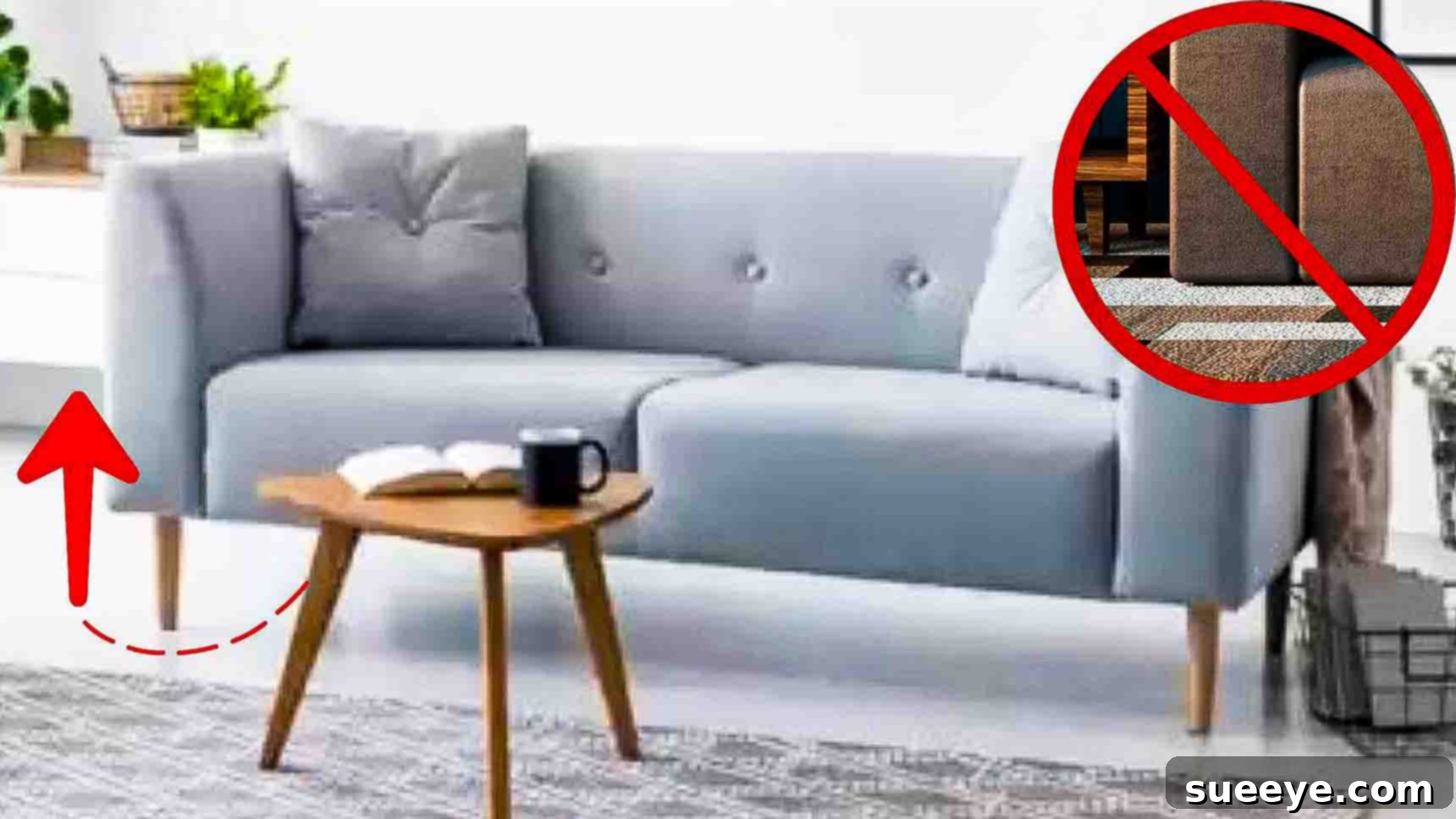
One of the most common mistakes in small space design is pushing all furniture against the walls. While this might seem counterintuitive to create more space, it actually makes a room feel cramped and static. The technique of “floating seating” involves moving your primary seating pieces, such as sofas and armchairs, away from the walls, even by just a few inches.
The impact of floating furniture is transformative:
- Creates Pathways: By pulling furniture away from the perimeter, you create small, visible pathways around the pieces. This allows the eye to travel freely around the room, making it feel less congested and more open.
- Adds Depth: When furniture is against the wall, it creates a flat, two-dimensional look. Floating it allows for slight variations in depth and creates shadows behind the pieces, adding a subtle three-dimensional quality that makes the room feel larger.
- Defines Zones: In open-concept living, floating furniture can effectively define distinct functional zones (e.g., living area, dining area) without the need for physical barriers, maintaining an open flow while providing structure.
- Avoids the “Boxed-In” Feeling: Leaving a small gap between furniture and walls prevents the room from feeling like a cramped box. It allows the eyes to perceive that there is “more” room beyond the furniture, even if it’s just a few inches.
When implementing floating seating, consider these tips:
- Anchor with a Rug: Use an area rug to define the “floating” seating area. This grounds the furniture and makes the arrangement feel intentional rather than haphazard.
- Consider Traffic Flow: Ensure there’s ample space for comfortable movement around the floated furniture. You don’t want to create obstacles, just visual breathing room.
- Choose Legged Furniture: Furniture with exposed legs, rather than skirted pieces that go all the way to the floor, allows light to pass underneath and shows more of the floor, further enhancing the sense of openness.
- Use Multi-functional Pieces: In a floating arrangement, consider furniture that can serve multiple purposes, such as ottomans with storage or nesting tables, to maintain functionality while minimizing clutter.
Unlocking the Potential of Your Home
Transforming a small space doesn’t require extensive renovations or a massive budget. It simply demands a thoughtful approach to design, understanding how perception can be manipulated to create illusions of grandeur. By implementing these four ingenious techniques—creating a compelling focal point, embracing vertical design, strategically placing full-length mirrors, and mastering floating furniture arrangements—you can significantly enhance the sense of space and openness in any room. These methods, inspired by Erikka Dawn Interiors, are not just about making a room appear larger; they’re about optimizing functionality, maximizing natural light, and creating an inviting atmosphere that truly reflects your style.
Give your home the fresh, expansive feeling it deserves. Experiment with these techniques, observe the changes, and enjoy the newfound spaciousness and aesthetic appeal of your beautifully redesigned apartment or house. Your friends will notice, and you’ll love living in a space that feels infinitely bigger and more comfortable.