
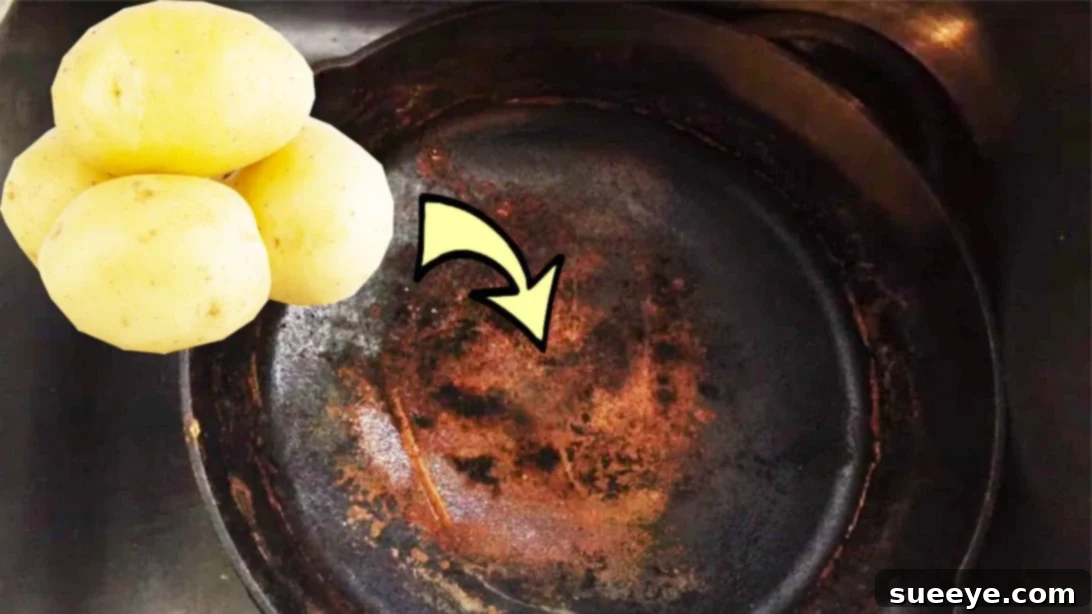
Discovering rust on your beloved pots, pans, or other metal cookware can be incredibly frustrating. Many of us automatically consider tossing them out, believing the damage is irreversible and that our kitchen investments are lost. However, before you declare them beyond repair, consider a surprisingly simple, remarkably effective, and completely all-natural solution that can bring your rusty kitchenware back to life. This comprehensive guide will walk you through an ingenious hack, popularized by Life With Sylvia on YouTube, demonstrating how common household items – a potato, salt, and cooking oil – can restore your cast iron or aluminum pans to their former glory. This method is not only highly practical and cost-effective, but it also champions organic cleaning, providing a sustainable way to tackle a very common household problem without resorting to harsh chemicals.
Rust, the reddish-brown flaky coating that appears on iron and its alloys, is essentially iron oxide. It forms when iron or steel comes into contact with oxygen and moisture over time – a process known as oxidation. For cookware, this often happens due to improper drying after washing, storage in high-humidity environments, or even just general wear and tear that exposes the metal to the elements. While cast iron is particularly susceptible due to its porous nature and the importance of its protective “seasoning” layer, aluminum pans can also develop oxidation, appearing as a dull, sometimes pitted or discolored surface, though not true rust in the same chemical sense as iron. Regardless of the specific metal type, a rusty or oxidized pan is not just unsightly; it can affect the taste of your food, potentially transfer metallic flavors, and even pose health concerns if consumed in large quantities over time. Learning to properly care for and restore your cookware extends its lifespan, saving you money and reducing waste.
The Allure of Natural Rust Removal: Why Go Organic?
In an age where we are increasingly mindful of the chemicals we bring into our homes and expose to our families, finding natural cleaning solutions is more appealing than ever. Many commercial rust removers contain harsh acids, strong abrasives, and potent chemicals that can be toxic, require careful handling with gloves and ventilation, and may even damage the delicate finish of your cookware if not used precisely according to instructions. Furthermore, the disposal of these chemical-laden products can be an environmental concern. The potato, salt, and oil method offers a superior alternative: it’s safe for you and your family, environmentally friendly, and remarkably effective. It leverages the inherent properties of these everyday ingredients to gently yet thoroughly lift away rust, leaving your cookware clean, revitalized, and ready for safe use without any lingering chemical residues or odors. This method is particularly beneficial for items that come into direct contact with food.
Unveiling the Science: How a Potato Tackles Rust
It might sound like an old wives’ tale at first glance, but there’s solid scientific reasoning backing the surprising effectiveness of a potato in rust removal. Potatoes contain oxalic acid, a natural organic acid that acts as a potent chelating agent. Chelating agents are fascinating compounds that can bind to metal ions (like those found in rust, which is iron oxide) and essentially lift them off the surface of the material. This chemical interaction weakens the bond between the rust and the metal. When combined with coarse salt, which acts as a gentle yet effective abrasive, the process is accelerated. The salt physically scrubs away the loosened rust particles that the oxalic acid has begun to break down. The addition of cooking oil further enhances this process; it acts as a lubricant, reducing friction during scrubbing, and also aids in lifting the rust. For cast iron, oil is also crucial for initiating or reinforcing the seasoning process, which creates a protective, non-stick, and rust-resistant barrier. Furthermore, the starchy texture of the potato also plays a role, helping to absorb and carry away the loosened rust particles, making the cleanup process more efficient. This synergistic action of chemical, mechanical, and protective elements makes the potato hack a truly brilliant solution.
Essential Materials for Your Rust Removal Project
Before embarking on your cookware restoration journey, gathering all your materials beforehand will make the process smooth, efficient, and stress-free. The beauty of this method is that you likely have everything you need already in your kitchen pantry or easily accessible at any grocery store.
- **Potato:** A medium to large-sized potato will usually suffice for one or two pans, providing ample scrubbing surface and oxalic acid. Russet or baking potatoes work well due to their firm texture.
- **Coarse Salt:** Such as sea salt, kosher salt, or even rock salt. Its granular, abrasive texture is absolutely key for physically scrubbing away the loosened rust. Fine table salt won’t provide the same scrubbing power.
- **Cooking Oil:** Any common cooking oil like vegetable, canola, sunflower, grapeseed, or even flaxseed oil will work. It serves multiple purposes: lubrication, rust lifting, and for cast iron, seasoning.
- **Dish Soap:** Your regular brand of dishwashing liquid will be needed for the final cleaning stage to remove oil and residue.
- **Warm Water:** For rinsing and washing.
- **Non-abrasive Cloth Scrubber or Sponge:** For the general washing process. Avoid metal scourers on cast iron unless you’re intentionally stripping seasoning.
- **Paper Towels or a Clean, Lint-Free Cloth:** Absolutely essential for drying the pan thoroughly after cleaning, and for applying the final oil coat.
Step-by-Step Guide: Effortlessly Restore Your Rusty Cookware
Follow these simple, detailed steps carefully to transform your rusty pans into sparkling clean, functional kitchen essentials. Remember, while the ingredients are natural, a little bit of physical effort – often referred to as “elbow grease” – goes a long way in achieving the best results!
Step 1: Prepare Your Workspace and Gather Tools
Begin by setting up a stable and clean surface to work on, ideally near a sink for easy access to water. Ensure you have all your materials – potato, salt, oil, dish soap, scrubber, and towels – laid out and ready within reach. This pre-preparation will help you move seamlessly through each stage of the cleaning process without interruption, making the task quicker and more enjoyable.
Step 2: Liberally Apply Salt and Oil to the Rusted Surface
Take your chosen potato and cut it cleanly in half, creating two fresh, exposed surfaces. Set one half aside. Now, generously sprinkle coarse salt directly onto the rusty areas of your frying pan or other cookware. Do not be shy with the salt; its abrasive texture is critical for the physical removal of rust. Next, pour a good amount of cooking oil over the salt and rust. The oil will act as a crucial lubricant, helping the salt and potato glide smoothly across the surface, reducing friction, and also aiding in the process of lifting the rust particles from the metal. Hold one half of the potato so that the cut, open area faces outwards, ready for scrubbing, with the skin-side against the palm of your hand for a secure and comfortable grip.
Step 3: The Potato Scrub – Witness the Rust Disappear
Using the cut side of the potato, begin scrubbing the rusty frying pan in a firm, continuous circular motion. Apply moderate but consistent pressure, treating the potato like a natural, hand-held scrubbing pad. As you scrub, you will visibly notice the rust particles rubbing off the pan and adhering to the potato surface. This is the oxalic acid in the potato, combined with the abrasive salt, actively working to break down and lift the rust. Continue scrubbing thoroughly, ensuring you cover all rusted areas, including the sides, edges, and even the handle if it’s metal and rusty. For particularly stubborn spots, you might need to apply more pressure or refresh the salt and oil. If the potato surface becomes too saturated with rust and loses its effectiveness, you can either trim off the used portion with a knife to expose a fresh surface or switch to the other half of the potato.
Step 4: Rinse and Initial Clean to Remove Debris
Once you are satisfied that you have scrubbed away as much visible rust as possible, rinse the pan thoroughly under hot running water. Use a non-abrasive cloth scrubber or sponge to help remove any remaining salt, potato residue, and loosened rust particles. You should already see a significant and encouraging improvement in the pan’s appearance at this stage, with much of the rust gone or greatly diminished.
Step 5: Final Wash to Eliminate Grease and Residue
Add a small amount of your regular dish soap to the pan and wash it as you normally would. This step is essential to remove any lingering oil from the scrubbing process, as well as any final traces of rust, potato, or salt. Ensure you rinse the pan thoroughly with running water until all soap suds are completely gone and the water runs clear. For cast iron, while modern mild dish soaps are generally fine for well-seasoned pans, prolonged soaking or very harsh detergents can strip away seasoning. Opt for a milder soap if you have one, or minimize scrubbing time with soap, especially if you plan to re-season.
Step 6: Immediate and Thorough Drying – A Critical Step
After rinsing, this is perhaps the single most critical step in preventing immediate re-rusting: you must dry your pan immediately and completely. Never let your pots and pans air dry, especially cast iron. Use clean paper towels or a lint-free cloth to tap and wipe the pan until it’s bone dry, inside and out. For cast iron, an excellent practice is to place it over low to medium heat on the stovetop for a few minutes (just until it’s warm to the touch) to ensure every last drop of moisture has evaporated from its pores. Any residual moisture can lead to new rust formation almost instantly, undoing all your hard work and making your efforts futile.
Step 7: Re-Seasoning Your Cookware (Crucial for Cast Iron Longevity)
This final step is particularly important and non-negotiable for cast iron cookware. Once the pan is completely dry and cooled slightly (if heated on the stovetop), apply a very thin, even coat of cooking oil to all surfaces of the pan – inside, outside, and the handle. Oils like flaxseed, grapeseed, or even regular vegetable oil work well. Use a clean paper towel to rub the oil in thoroughly, ensuring no visible puddles or thick layers remain, as this can lead to a sticky, gummy finish. The goal is a barely-there film. For cast iron, you should then consider re-seasoning it by baking it in the oven. Preheat your oven to 375-400°F (190-205°C). Place the oiled pan upside down on the middle rack of the oven. If you’re concerned about drips, you can place a baking sheet or aluminum foil on the rack below. Bake for approximately one hour. After an hour, turn off the oven and allow the pan to cool completely inside the oven. This high-heat process polymerizes the oil, creating a durable, naturally non-stick, and crucial rust-resistant layer, effectively rebuilding and strengthening its protective seasoning. For aluminum or other metals, simply applying a thin layer of oil and wiping off the excess will offer a minor protective barrier against future oxidation.
Proactive Maintenance: Essential Tips for Rust Prevention
While the potato hack is excellent for removing existing rust, prevention is always better than cure. Adopting good maintenance habits will keep your cast iron and other metal cookware rust-free and in excellent condition for many years to come, ensuring their longevity and performance in your kitchen:
- **Always Dry Immediately and Completely:** This cannot be stressed enough. Never let your pots and pans air dry after washing. Wipe them thoroughly dry with a towel immediately. For cast iron, a quick heat-up on the stovetop ensures all moisture has evaporated from its pores.
- **Season Regularly (Especially for Cast Iron):** The seasoning layer is your cast iron’s primary defense against rust and provides its natural non-stick properties. Re-season your pans periodically, especially after a deep clean like rust removal or if food starts to stick.
- **Avoid Harsh Soaps and Metal Scourers (Cast Iron):** While some modern, mild dish soaps are generally acceptable for well-seasoned cast iron, prolonged soaking or very harsh detergents can strip away that hard-earned seasoning. Avoid abrasive metal scourers unless you intend to completely strip the pan for a full re-seasoning.
- **Proper Storage is Key:** Store cookware in a dry environment. For cast iron, consider placing a paper towel or a thin cloth between stacked pans. This absorbs any latent moisture and prevents scratching, which can compromise the seasoning.
- **Never Use the Dishwasher for Cast Iron:** Dishwashers are a big no-no for cast iron and many other types of metal pans (like those with non-stick coatings or certain aluminum finishes). The harsh detergents and prolonged exposure to moisture in a dishwasher will quickly strip seasoning and accelerate rust formation or other damage.
- **Pre-heat Gently and Gradually:** For cast iron, gradually heating the pan before cooking helps maintain its integrity and prevents thermal shock. Avoid extreme temperature changes.
- **Cook with Oil/Fat:** Regular cooking with fats and oils helps to maintain and build up the seasoning layer on cast iron over time.
Beyond the Kitchen: Versatile Applications for This Rust Hack
The effectiveness and gentle nature of the potato and salt method extend beyond just kitchen cookware. You can adapt this brilliant hack for various other metal items around your home that might be showing unwelcome signs of rust. Think about rusty garden tools like shovels or trowels, metal hardware such as hinges or bolts, or even old barbecue grates. This method offers an eco-friendly and safe alternative to chemical rust removers for a wide array of metallic objects. Always remember to test a small, inconspicuous area first, especially on more delicate or decorative items, but the gentle yet powerful action of this natural cleaning solution makes it remarkably versatile for tackling numerous rust removal challenges throughout your home and garden.
Conclusion: A Simple, Sustainable Solution for a Common Problem
There you have it – a remarkably simple, incredibly eco-friendly, and highly effective method for cleaning rust from your cherished cast iron and aluminum cookware using just a potato, coarse salt, and everyday cooking oil. This ingenious hack, brilliantly demonstrated and popularized by “Life With Sylvia,” not only saves you the significant cost and hassle of replacing rusty pans but also champions sustainable living by extending the functional lifespan of your kitchen essentials. The next time you spot that unwelcome reddish-brown coating on a pan you thought was ruined, don’t despair or reach for harsh chemicals. Instead, grab a potato, some salt, and oil, and with a little bit of effort and patience, you’ll be genuinely amazed at how quickly your rusty cookware can be transformed to look as good as new. Share this fantastic, practical, and brilliant tip with your friends, family, and loved ones; they’ll surely appreciate discovering such an accessible and effective solution for a common household dilemma!